


dental forceps
Datecirca 1910
Inventory Number1997-1-1972
ClassificationForceps
Subject
Maker
American
Inventor
Isaac Adams, Jr.
1836 - 1911
Cultural Region
Dimensions2.5 × 3.5 × 19 cm (1 × 1 3/8 × 7 1/2 in.)
Material
DescriptionDental forceps are comprised of three parts, the handle(s), the neck, and the beak or nib. In this case, the handle is long, flat and rounded at the end. A portion of the outside of each handle is covered in a cross-hatched pattern, presumably for grip. The beak is gently angled and has tiny teeth. The entire instrument is made of metal and is lightly speckled with rust.
Signedunsigned
Inscribedpunched on end of one arm: 7
Curatorial RemarksStored in cardboard box along with other artifacts used in cases a and b of this exhibition.
FunctionDental forceps are pincers used to grab teeth, often to extract them.
These oral surgical instruments are often specifically designed for certain kinds of teeth: some are made for the right side, some for the left, some for both (called "universal," like the one pictured here); some are maxillary (that is, for the upper layer of teeth), others are mandibular (that is, for the lower layer of teeth); some are for canines, or molars, others are for wisdom teeth or incisors. Some can even be designed for tooth 'conditions' -- are other teeth crowding the tooth that needs to come out? is the tooth itself badly chipped?
The angles and notches of the 'beak,' that is the part that grasps the tooth, are specifically designed with these teeth in mind. Each model of forceps is given a specific number; there are hundreds of different types.
These oral surgical instruments are often specifically designed for certain kinds of teeth: some are made for the right side, some for the left, some for both (called "universal," like the one pictured here); some are maxillary (that is, for the upper layer of teeth), others are mandibular (that is, for the lower layer of teeth); some are for canines, or molars, others are for wisdom teeth or incisors. Some can even be designed for tooth 'conditions' -- are other teeth crowding the tooth that needs to come out? is the tooth itself badly chipped?
The angles and notches of the 'beak,' that is the part that grasps the tooth, are specifically designed with these teeth in mind. Each model of forceps is given a specific number; there are hundreds of different types.
ProvenanceGiven to Harvard University by Mr. George Dubpernell of Detroit in 1961 for the Isaac Adams exhibition (June 1961-March 1962) as example of 50-year-old nickel plating.
Historical AttributesUsed by Dr. Karl Dubpernell, who practised in Detroit, Michigan (1894-1955).


Louis Jules Duboscq
Date: 1860-1880
Object number: 1996-1-0703b

Edward Marmaduke Clarke
Date: 1838-1840
Accessories: 5 objectives for simple microscope; 2 objectives for compound microscope (1 in can; 1 with lieberkuhn); cup diaphragm with lieberkuhn in brass box; brass box of cover slips; stage forceps; tweezers; 2 live boxes; frog plate; bull's eye; fish tube wire; wrench; chamois; 2 unmounted lenses; 40 prepared slides; standing case; 2 keys.
Object number: 1018

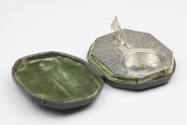
Michael Butterfield
Date: 1684-1687
Accessories: case
Object number: 7472


Adrien Gavard
Date: circa 1860
Accessories: hinged mahogany case with original trade label; extra arm; writing implements; instrument weights; small ivory wheels with brass frames
Object number: 1997-1-1856

