


laminated-stack transducer
Date1941-1946
Inventory Number1997-1-0831
ClassificationTransducer
Subject
Maker
Underwater Sound Laboratory, Harvard University
1941 - 1949
Cultural Region
Place of Origin
Dimensions8.3 × 11.4 × 2.8 cm (3 1/4 × 4 1/2 × 1 1/8 in.)
Material
Bibliography
DescriptionThin slices of metal stacked together form the structure of this transducer. It has a triangular shape with a small arch cavity in the center. One wire is wound inside the cavity. Two aluminum parts of the same shape hold the stack together. A tape and a piece of cord are wound at the bottom of the transducer. The number 658 has been painted in white at the top.
According to Hunt's report, "This form of transducer construction is exemplified best by the SPEP transducer for use at 60 kc and by a variety of tapered stack elements used in construction of the multielement transducers for scanning sonar. These transducers were based originally on the qualitative suggestion of using an unsymmetrical vibrator to produce enhanced radiation from one of its faces. Extensive experiments and analysis finally furnished a basis for sound engineering design of such laminated structures for optimum performance."
According to Hunt's report, "This form of transducer construction is exemplified best by the SPEP transducer for use at 60 kc and by a variety of tapered stack elements used in construction of the multielement transducers for scanning sonar. These transducers were based originally on the qualitative suggestion of using an unsymmetrical vibrator to produce enhanced radiation from one of its faces. Extensive experiments and analysis finally furnished a basis for sound engineering design of such laminated structures for optimum performance."
Signedunsigned
Curatorial RemarksSeveral types of magnetostrictive transducers were developed at the Underwater Sound Laboratory. For a complete list, until 1946, see Prof. Hunt's report. On pp. 93-94, for instance, are listed the 1. Hydrophones for sound gear monitors; 2. Ring-stack transducers; 3. Laminated-stack transducers; 4. Tube-and-plate transducers; and 5. Miscellaneous transducers.
FunctionA transducer is a device that transform one type of energy (or signal) into another form, so it could be used for another purpose.
ProvenanceFrom Professor Frederick V. Hunt, former director of the Harvard University Underwater Sound Laboratory.

Underwater Sound Laboratory, Harvard University
Date: 1941-1946
Object number: 1997-1-0830

Underwater Sound Laboratory, Harvard University
Date: 1941-1946
Object number: 1997-1-0833

Underwater Sound Laboratory, Harvard University
Date: 1941-1946
Object number: 1997-1-0840

Underwater Sound Laboratory, Harvard University
Date: 1941-1946
Object number: 1997-1-0819

Underwater Sound Laboratory, Harvard University
Date: 1941-1946
Object number: 1997-1-0818
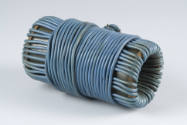
Underwater Sound Laboratory, Harvard University
Date: 1944
Object number: 1997-1-0799

Underwater Sound Laboratory, Harvard University
Date: 1941-1946
Object number: 1997-1-0836

Underwater Sound Laboratory, Harvard University
Date: 1941-1946
Object number: 1997-1-0837

Underwater Sound Laboratory, Harvard University
Date: 1941-1946
Object number: 1997-1-0825

Underwater Sound Laboratory, Harvard University
Date: 1941-1946
Object number: 1997-1-0816

Underwater Sound Laboratory, Harvard University
Date: 1941-1946
Object number: 1997-1-0822

Underwater Sound Laboratory, Harvard University
Date: 1941-1946
Object number: 1997-1-0817