


Japanese calculating machine
Datecirca 1945
Inventory Number1997-1-0233
ClassificationCalculating Machine
Subject
Maker
Tiger Calculating Machine Company
1923 - 1970s
Cultural Region
Place of Origin
Dimensions13.4 x 39 x 17.2 cm (5 1/4 x 15 3/8 x 6 3/4 in.)
Material
DescriptionPinwheel calculator mounted on a raised, black metal base. Bottom portion of calculator is a black metal cylinder with silver adjustment cranks to the left and right. Across the body of the cylinder is a register displaying a row of ten zeros separated by a small space from a row of eighteen zeros. The numbers 1-10 and 1-18 are printed, from right to left, below the registers respectively. There is a black metal bar below the registers with three movable black pointers.
The top portion has a black metal cover with nine columns of the numbers 1-9 printed on it, with a slit in the metal to the right of each column. There is a register above the slits, displaying nine zeros, each zero directly above a slit. The numbers 1-9 are printed below the slits, from right to left. A lever sits in each slit.
There is a silver adjustment crank to the left of the top portion and a larger hand crank, with a foam piece covering the handle, to the right. To the right of the slits are two arrows, one pointing up one pointing down, indicating the clockwise and counter-clockwise directions of the hand crank. Japanese characters are printed above and below the arrows, presumably 'Add/Mult' above 'Subt/Div' below [see Brunsviga version, 1997-1-0245].
On the top portion, to the left of the slits, is a lever with two positions, a division sign above the left position and a multiplication sign above the right position.
The top portion has a black metal cover with nine columns of the numbers 1-9 printed on it, with a slit in the metal to the right of each column. There is a register above the slits, displaying nine zeros, each zero directly above a slit. The numbers 1-9 are printed below the slits, from right to left. A lever sits in each slit.
There is a silver adjustment crank to the left of the top portion and a larger hand crank, with a foam piece covering the handle, to the right. To the right of the slits are two arrows, one pointing up one pointing down, indicating the clockwise and counter-clockwise directions of the hand crank. Japanese characters are printed above and below the arrows, presumably 'Add/Mult' above 'Subt/Div' below [see Brunsviga version, 1997-1-0245].
On the top portion, to the left of the slits, is a lever with two positions, a division sign above the left position and a multiplication sign above the right position.
Signedon body: Tiger Calculator Company [in Japanese characters]
Inscribedon top: No 47406 [also several Japanese characters]
Curatorial RemarksA card accompanying this instrument says: "apparently a combination of features of the Brunsviga and Odhner machines".
The date is given according to the serial number. For more information on dating this type of machines, see the following <a href="http://www.rechenmaschinen-illustrated.com/pictures_Tiger.htm" target="_blank">website</a>.
FunctionThis pinwheel calculator is to be used for subtraction, addition, multiplication, and division. Each column of numbers in the top portion corresponds to a place value. A number is selected by moving the lever in the appropriate column to the appropriate number. For example, for the number 509, a lever is moved next to the five in the hundreds column and the nine in the ones column. After a number is entered, the crank is pulled clockwise and, through the action of gears, the number appears in the display register. If another number is selected, a clockwise pull of the crank will add it to the number in the display register and a counterclockwise pull will subtract it. The number of pulls of the crank is recorded in the counter register to the left of the display register. Multiplication and division are completed through cumulative additions and subtractions.
For a YouTube video of how this machine worked, see the following website.
For a YouTube video of how this machine worked, see the following website.
ProvenanceOn 13 March 1997, this calculator was picked up from the Howard H. Aiken Computation Laboratory, Harvard University, 33 Oxford Street. The instruments were transferred to the Collection by Edward P. Jackson, Facilities Manager in the Division of Engineering and Applied Sciences. Was formerly on exhibition in the entrance area adjacent to the IBM Mark I computer on the first floor of the Science Center, Harvard University.


Grimme, Natalis & Company
Date: 1920-1930
Accessories: cover
Object number: 1989-0003

Central Scientific Company
Date: 1935-1950
Accessories: instruction manual
Object number: 1997-1-0358a

Compagnie Nationale des Machines de Bureau
Date: circa 1945
Accessories: two instruction booklets for a similar model made by British company Friden Calculating Machine Co. (in English)
Object number: 1990-5-0027


Ensign Manufacturing Company
Date: circa 1915
Accessories: power cord
Object number: 1997-1-0232


Frank S. Baldwin
Date: 1897-1907
Accessories: instruction manual (in object file); history of instrument (both in very poor condition)
Object number: 1997-1-0246

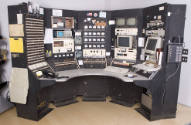
Harvard Cyclotron Laboratory
Date: 1947-2002
Object number: 2003-1-0291

Wang Laboratories, Inc.
Date: 1970
Accessories: cloth instrument cover lined with tissue paper; black power cord; accompanied by central electronic unit (2001-1-003b); two page hand-written note from Peter L. Smith, Research associate, Harvard College Observatory, regarding the donation of the calculator, dated 10 December, 2001 (original and copy in instrument file); photocopy of operation instructions from the bottom panel of calculator unit (in instrument file); printed document on the history of the Wang 360SE by Rick Bensene (in instrument file); printed document on the history of the Want 360SE from Geocity (in instrument file); printed document on the Orbiting Solar Observatories (in instrument file)
Object number: 2001-1-0033a

Polaroid Corporation
Date: 2003
Accessories: printer ribbon, power cable, adapter cable, original packing materials, instruction manuals (in object file), and gray card (in object file)
Object number: 2009-1-0039