


calculating machine, "The Millionaire"
Date1900-1910
Inventory Number1997-1-0253
ClassificationCalculating Machine
Subject
Maker
Hans W. Egli
fl. 1900 - 1923
Inventor
Otto Steiger
1858 - 1923
Supplier
William A. Morschhauser
1872 - 1940
User
Harvard Computation Laboratory
1944 - 1997
Cultural Region
Place of Origin
Dimensions85.5 x 86 x 42 cm (33 11/16 x 33 7/8 x 16 9/16 in.)
Material
Bibliography
DescriptionThis machine is set on a four-legged metallic stand, two of which are terminated by wheels. On each side of the stand is a folding panel made of wood. This model of the Millionaire was put in an aluminum box with a black-painted sheet-metal cover hinged at the back. The brass top panel of the machine was finished with a chemical blackening agent.
On the top panel is a multiplier lever, a hand crank, eight rows of sliding markers with numbers from 0 to 9, a regulator to set which type of operation is done (A, M, D, S), a carriage shifter and two sliding carriage buttons that set the result numbers and the control numbers to zero.
Inside the cover are instructions in English on how the Millionaire worked. There is also a multiplication table from 0-99 with two sliders, called a dividing schedule. Two safety screws were used to secure parts of the mechanism in place when the machine was moved. The brush is missing.
For a detailed description of this machine, see here
On the top panel is a multiplier lever, a hand crank, eight rows of sliding markers with numbers from 0 to 9, a regulator to set which type of operation is done (A, M, D, S), a carriage shifter and two sliding carriage buttons that set the result numbers and the control numbers to zero.
Inside the cover are instructions in English on how the Millionaire worked. There is also a multiplication table from 0-99 with two sliders, called a dividing schedule. Two safety screws were used to secure parts of the mechanism in place when the machine was moved. The brush is missing.
For a detailed description of this machine, see here
Signedleft plate: W. A. Morschhauser / SOLE AGENT / 1 Madison Avenue / NEW YORK CITY
right plate: Hans W. Egli / Ingenieur / Fabrikation von Rechenmaschinen / Pat. O. Steiger / ZURICH II.
lower right corner: MADE IN SWITZERLAND
Inscribedin the center: THE MILLIONAIRE
on machine: Ptd May 7th 1895 Sept 17th 1895
FunctionInvented by the Swiss engineer Otto Steiger (1858-1923), the "Millionaire" calculating machine was invented to make the four simple arithmetical operations: addition, subtraction, multiplication and division. Such mechanical devices go back to the seventeenth century, with the famous inventions of Pascal and Leibniz. This one here was the first machine commercially sold that was able to make direct multiplications, that is without having to make repeated additions, as did earlier machines.
Over 4000 Millionaire machines were built between the 1890s and the 1930s. This one has serial number 704. It was manufactured and marketed by the Hans Egli Company of Zurich and sold in the United States via the New York City firm W. A. Morschhauser.
The Millionaire calculator can be used to perform all fundamental arithmetic operations: addition, multiplication, subtraction, and division.
Unlike many other calculators of its era, the Millionaire calculator performs multiplication and division directly instead of in a series of additions and subtractions.
In order to perform an operation, the machine has to be cleared of all values and the carriage set in its rightmost position. The user then selects the operation she would like to perform using the knob at the top right-hand side of the control panel. Each operation proceeds using a combination of number inputs, and turning the crank in the most top right-hand corner of the control panel. For a detailed explanation of how to perform each operation see here.
An excellent resource for the history, operating instructions, technical specifications, and design features of Hans Egli's Millionaire Calculator is the entry in Jon Wolff's Web Museum that can be accessed here.
Over 4000 Millionaire machines were built between the 1890s and the 1930s. This one has serial number 704. It was manufactured and marketed by the Hans Egli Company of Zurich and sold in the United States via the New York City firm W. A. Morschhauser.
The Millionaire calculator can be used to perform all fundamental arithmetic operations: addition, multiplication, subtraction, and division.
Unlike many other calculators of its era, the Millionaire calculator performs multiplication and division directly instead of in a series of additions and subtractions.
In order to perform an operation, the machine has to be cleared of all values and the carriage set in its rightmost position. The user then selects the operation she would like to perform using the knob at the top right-hand side of the control panel. Each operation proceeds using a combination of number inputs, and turning the crank in the most top right-hand corner of the control panel. For a detailed explanation of how to perform each operation see here.
An excellent resource for the history, operating instructions, technical specifications, and design features of Hans Egli's Millionaire Calculator is the entry in Jon Wolff's Web Museum that can be accessed here.
Provenancetransferred to the CHSI in 2007 by Edward P. Jackson, Facilities Manager in the Division of Engineering and Applied Sciences.

Hans W. Egli
Date: circa 1925
Accessories: brush
Object number: 1996-1-0166

Hans W. Egli
Date: circa 1915
Object number: 1997-1-0252


Digital Equipment Corporation
Date: circa 1980
Object number: 1998-1-1042


Frank S. Baldwin
Date: 1897-1907
Accessories: instruction manual (in object file); history of instrument (both in very poor condition)
Object number: 1997-1-0246

Compagnie Nationale des Machines de Bureau
Date: circa 1945
Accessories: two instruction booklets for a similar model made by British company Friden Calculating Machine Co. (in English)
Object number: 1990-5-0027
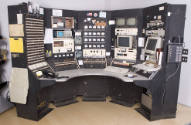
Harvard Cyclotron Laboratory
Date: 1947-2002
Object number: 2003-1-0291

American
Date: 1870-1920
Accessories: circular disk weight (1998-1-0208)
Object number: 1996-1-0419

American
Date: 1870-1920
Accessories: circular disk weight (1998-1-0208)
Object number: 1996-1-0418

Contina AG
Date: circa 1964
Accessories: two-part storage case; two instruction books
Object number: DW0973

Contina AG
Date: circa 1960
Accessories: instruction booklet; "Mathematical Handbooks" (2); copies of invoice (2); photocopy of the envelope in which David Wheatland acquired the materials (the original was destroyed in 1997)
Object number: 1990-5-0025