quartz spectrograph
Datecirca 1928
Inventory NumberHA0114
ClassificationSpectrograph
Subject
Maker
Adam Hilger Ltd.
1874 - 1948
Cultural Region
Place of Origin
Dimensions47 x 134 x 18.5 cm (18 1/2 x 52 3/4 x 7 5/16 in.)
Material
Bibliography
DescriptionThe all metal medium quartz spectrographs have the same general specification as the E2, E3, E29 and E34. They were also given an improved lens system, completely redesigned. The available spectrum range is extended in the ultraviolet to 2000 Å and in the infrared to 10,000 Å, without reducing the linear dispersion. The E315 specification corresponds to the E2.
The lenses have a 61cm focus. The size of the photographic plate is 10x4 inches. The slit is Hilger's No. F31. The dispersing system consists of one Cornu prism (4.1cm high by 6.5 cm on the long face). There is a vertical motion by rack and pinion to the dark slide, with scale (0-80, divided in units), whereby a number of exposures can be taken one below the other. The whole apparatus is supported by a four-leg cast iron support.
A further advantage of the speed of this instrument is attainable by use of the Neocyanine-bathed plates recently put on the market by Kodak Ltd. With freshly bathed plates the 10,140 Å line from a quartz mercury vapor lamp can be recorded in one hour. (Taken from 1928 trade catalogue).
The lenses have a 61cm focus. The size of the photographic plate is 10x4 inches. The slit is Hilger's No. F31. The dispersing system consists of one Cornu prism (4.1cm high by 6.5 cm on the long face). There is a vertical motion by rack and pinion to the dark slide, with scale (0-80, divided in units), whereby a number of exposures can be taken one below the other. The whole apparatus is supported by a four-leg cast iron support.
A further advantage of the speed of this instrument is attainable by use of the Neocyanine-bathed plates recently put on the market by Kodak Ltd. With freshly bathed plates the 10,140 Å line from a quartz mercury vapor lamp can be recorded in one hour. (Taken from 1928 trade catalogue).
Signedon plate holder: ADAM HILGER LTD / LONDON, ENGLAND
Inscribedon instrument: No E.315.305 / 32220
FunctionThe Hilger medium quartz spectrographs with quartz prisms and lenses have been designed with the following in view: 1) To be in permanent adjustment; 2) To give the whole spectrum from 8000 Å to 2100 Å (and in the case of the small size to 1850 Å) on one plate. The new all-metal ones go from 10,000 Å to 2,000 Å; 3) To give good definition over the whole spectrum on the ordinary photographic plate; 4) To give as large an amount of light as is consistent with the above conditions, thus enabling spectrograms to be taken with relatively short exposures. It is sent out completely adjusted, ready for photographs to be taken...; 5) The advantages of the new "all metal" spectrographs should be noted. These should always be selected where climatic conditions are severe (hot, very dry, or very humid).
(Description taken almost verbatim from 1928 trade catalogue)
(Description taken almost verbatim from 1928 trade catalogue)


Adam Hilger Ltd.
Date: circa 1928
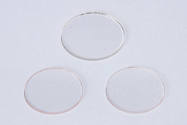
Accessories: 3 discoidal feet.
Object number: RS1081

Adam Hilger Ltd.
Date: 1924-1930
Accessories: Photographic plate holder
Object number: 2005-1-0012a,b


Joseph Wright of Derby
Date: 1768
Accessories: in frame
Object number: 2003-1-0052

William Pether
Date: photographed 1980s-1990s
Object number: 1998-1-0935


John Cuthbertson
Date: 1770-1815
Accessories: brown storage box, descriptive tag, thin strip of paper in box with the inscription "lucernal microscope" in David P. Wheatland's handwriting (which refers to figs. 47-48 and 51 in this series), page from the book "Old Science and Medicine" with a photographic copy of the first print from this series, entitled "The Large Electric Machine at Haarlem."
Object number: 1998-1-1087


Grass Instrument Company
Date: 1935-1950
Object number: 1997-1-0170b
Adam Hilger Ltd.
Date: circa 1920
Object number: 2007-1-0571