


Scribola adding and printing machine
Date1917-1927
Inventory Number1997-1-0241
ClassificationAdding and Printing Machine
Subject
Maker
Ruthardt & Company
Cultural Region
Place of Origin
Dimensions8 × 10.7 × 30.5 cm (3 1/8 × 4 3/16 × 12 in.)
Material
DescriptionThe Scribola adding and printing machine is a long, black, rectangular device with a printing mechanism attached to the top. The machine has a stylus keyboard on the front face. The keyboard consists of nine rows of numbers each consisting of ten small buttons, each labeled with a number from 0-9. All the buttons in the top most row are labeled with 9, all the buttons on row third from the bottom are labeled with 1 and each intermediate row is numbered such that the number decrease from top to bottom sequentially. The second bottom row is numbered with 0s for the first seven columns and the final three are blank. The first seven rows of the bottom row are blank and the last three are numbered with 0s. All the buttons are made of white plastic. In each row, the first two columns of buttons have black numerals, the next three columns have red numerals, the next three columns have black numerals, and the last two columns have red.
Above the keyboard is a rectangular display window with ten digit numerical display capabilities. This window displays the results of the arithmetic operations. The color of the display digits are the same as the color of the buttons on the keyboard below: two white, followed by three red, followed by three white, followed by two red.
On the left hand side of the machine is a metal level with a grey lever. On the right hand side of the machine is a small metal crank used for clearing the results display window. At the top on the right hand side of the machine, there should be another metal crank used to control the printing mechanism, however, this crank is missing from this item. The printing mechanism at the top of the device contains a holder for the role of paper, an ink roller, and a series of metal guiding bars. There is also a printing cylinder attached to the top of the black component of the mechanism. It can display all permutations of ten digit numbers. Once the results have been calculated, the printing cylinder is set to the result number and, once inked, it presses the result onto the paper. There is a black knob on the right-hand side of the printing mechanism for manually moving the paper.
Above the keyboard is a rectangular display window with ten digit numerical display capabilities. This window displays the results of the arithmetic operations. The color of the display digits are the same as the color of the buttons on the keyboard below: two white, followed by three red, followed by three white, followed by two red.
On the left hand side of the machine is a metal level with a grey lever. On the right hand side of the machine is a small metal crank used for clearing the results display window. At the top on the right hand side of the machine, there should be another metal crank used to control the printing mechanism, however, this crank is missing from this item. The printing mechanism at the top of the device contains a holder for the role of paper, an ink roller, and a series of metal guiding bars. There is also a printing cylinder attached to the top of the black component of the mechanism. It can display all permutations of ten digit numbers. Once the results have been calculated, the printing cylinder is set to the result number and, once inked, it presses the result onto the paper. There is a black knob on the right-hand side of the printing mechanism for manually moving the paper.
Signedon the top: Scribola / Patent
Inscribedon the front: No. 5304
Curatorial RemarksAccompanying card calls it an "early type of stylus adding and printing machine". This Scribola is missing a small metal crank on the right had side near the top of the device used to control the printing mechanism.
FunctionThe Scribola calculator is capable of performing addition and subtraction as well as printing the results. Users employ a stylus to enter the numbers and desired operations onto the keyboard on the face. The results, up to ten digits, are displayed at the top. The machine can be cleared and the results printed using the levers on the left and the right of the machine.
For a digitized copy of the original instruction manual for the Scribola calculator and printer, click here.
For a digitized copy of the original instruction manual for the Scribola calculator and printer, click here.
ProvenanceFrom the Howard H. Aiken Computation Laboratory, 33 Oxford Street, Harvard University, picked up on March 13, 1997.

Burroughs Adding Machine Company
Date: 1911-1927
Accessories: leather dust cover
Object number: 1996-1-0374

Compagnie Nationale des Machines de Bureau
Date: circa 1945
Accessories: two instruction booklets for a similar model made by British company Friden Calculating Machine Co. (in English)
Object number: 1990-5-0027


Hammond Typewriter Company
Date: circa 1923
Accessories: four Hammond type shuttles for different type faces, each with a wooden storage box; four laminated paper rectangles with symbol placement guide; instruction book, instruction sheets, advertisements, and correspondence (in object file)
Object number: 1996-1-0373

Hans W. Egli
Date: circa 1915
Object number: 1997-1-0252

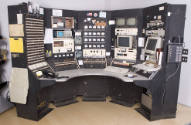
Harvard Cyclotron Laboratory
Date: 1947-2002
Object number: 2003-1-0291


Texas Instruments Incorporated
Date: 1973
Accessories: black vinyl, leatherized case with belt hanging clip on back and zipper; instruction booklet inside case
Object number: 1991-5-0001

Felt and Tarrant Manufacturing Company
Date: 1887-1900
Object number: 5400
See also/See also
