


du bois-Reymond-type inductorium
Datecirca 1890
Inventory Number2008-1-0112
ClassificationInductorium
Subject
Maker
Wilhelm Petzold
Cultural Region
Place of Origin
Dimensions13 x 60 x 8.5 cm (5 1/8 x 23 5/8 x 3 3/8 in.)
Material
DescriptionThis instrument is made of two separate circuits, consisting of wires wound into coils. The smaller coil, known as the primary circuit, was fed by a battery linked to two binding posts. The larger coil, secondary circuit, is independently electrified and can slide onto the primary coil.
Two solenoids, called interrupter coils, arranged in series are used to put in vibration a metal plate attached to the screw device on the opposite side of the solenoids. The vibration of the plate can be adjusted to a specific frequency, producing a pulsating current into the primary circuit. This current creates an electromagnetic field, which is transmitted by induction to the secondary coil. That coil generates a higher voltage than the current generated by the simple battery. The voltage amplitude is adjusted by sliding the secondary coil over the primary circuit.
The base is equipped with a centimeter scale so the same current can be reproduced again with the same intensity. The current thus generated is transmitted to electrodes for tissue stimulation.
Larger coil (secondary circuit) has stamped on one rim "5050" and "5" on the other rim. Also written on "5" rim is "SECOND".
Two solenoids, called interrupter coils, arranged in series are used to put in vibration a metal plate attached to the screw device on the opposite side of the solenoids. The vibration of the plate can be adjusted to a specific frequency, producing a pulsating current into the primary circuit. This current creates an electromagnetic field, which is transmitted by induction to the secondary coil. That coil generates a higher voltage than the current generated by the simple battery. The voltage amplitude is adjusted by sliding the secondary coil over the primary circuit.
The base is equipped with a centimeter scale so the same current can be reproduced again with the same intensity. The current thus generated is transmitted to electrodes for tissue stimulation.
Larger coil (secondary circuit) has stamped on one rim "5050" and "5" on the other rim. Also written on "5" rim is "SECOND".
Signedon primary coil stand: WILH. PETZOLD / LEIPZIG
FunctionThis type of instrument was developed by Emil du Bois-Reymond for electrophysiology studies. This is basically an electromagnetic device used for nerve and muscle stimulation.
ProvenanceGift from Peter Grigg, Prof. Emeritus, UMass Medical School, Worcester, MA.
Historical AttributesThis instrument was used in the laboratories of the Syracuse University College of Medicine, which became part of SUNY in 1950.


Rudolph Koenig
Date: circa 1863
Accessories: repeater (item 8000b)
Object number: 8000a


Ducretet et Lejeune
Date: 1892-1896
Object number: DW0089
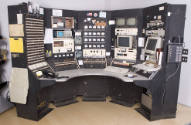
Harvard Cyclotron Laboratory
Date: 1947-2002
Object number: 2003-1-0291


